“We really like you. But why should we pay $3 per kg more for your coffee?”
That’s often what a cafe owner thinks or says. They know better. But when they are comparing all the offers together, they are only looking at one number. Price per kg.
$3 is only 6 cents per cup. The best coffee partner is not the cheapest one. The best coffee partner is the one who can help you achieve your goals.
What are you buying?
You are buying more than a bag of coffee. You are buying the ability to make and serve delicious coffee for a profit.
You must look at the coffee, the equipment, the training and support, the servicing and all the other things a great partner can provide. Things like impact, innovation, research and much more.
For us, the mission is to enable cafes and venues to serve better coffee while being sustainable. Sustainability means healthy profit, focused purpose, great customer experience, and an enduring reputation.
The problem is that even if you know about all the various things to look for, the price per kg is what you will keep coming back to. You will anchor to that number. So you must go out of your way to ensure you are considering all the important things.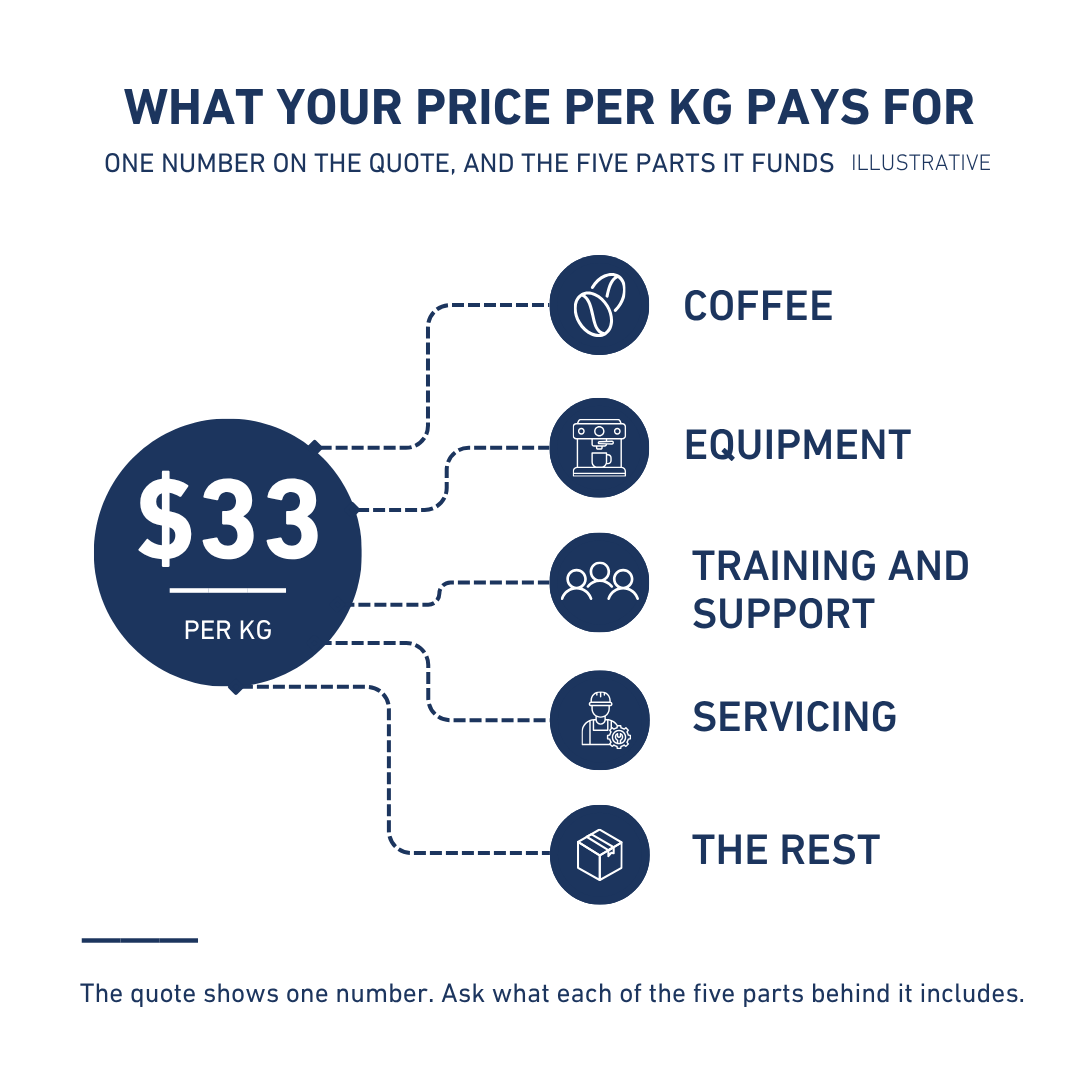
A $10 per kg difference is only 10 to 20 cents per cup. The cost of coffee in the cup is only a fraction of all the costs. And what your coffee partner provides you affects most of the other costs.
Even then, costs are only one side of the equation. The level of your experience and the quality of your coffee determine how much you can charge for that cup of coffee. And ultimately what your profit is and how sustainable it will be to maintain in the long run.
How Australia does it
In Australia, many roasters supply coffee and the equipment. The quality and level of coffee and equipment differ significantly. Then the level of service, support, training and the rest changes wildly between the options.
Australia is not alone, but it is quite unique. Most other countries do not have roasters partnering with and providing so much to their cafes. The table below shows some other countries that do similar things, but few pair the full package with specialty coffee.
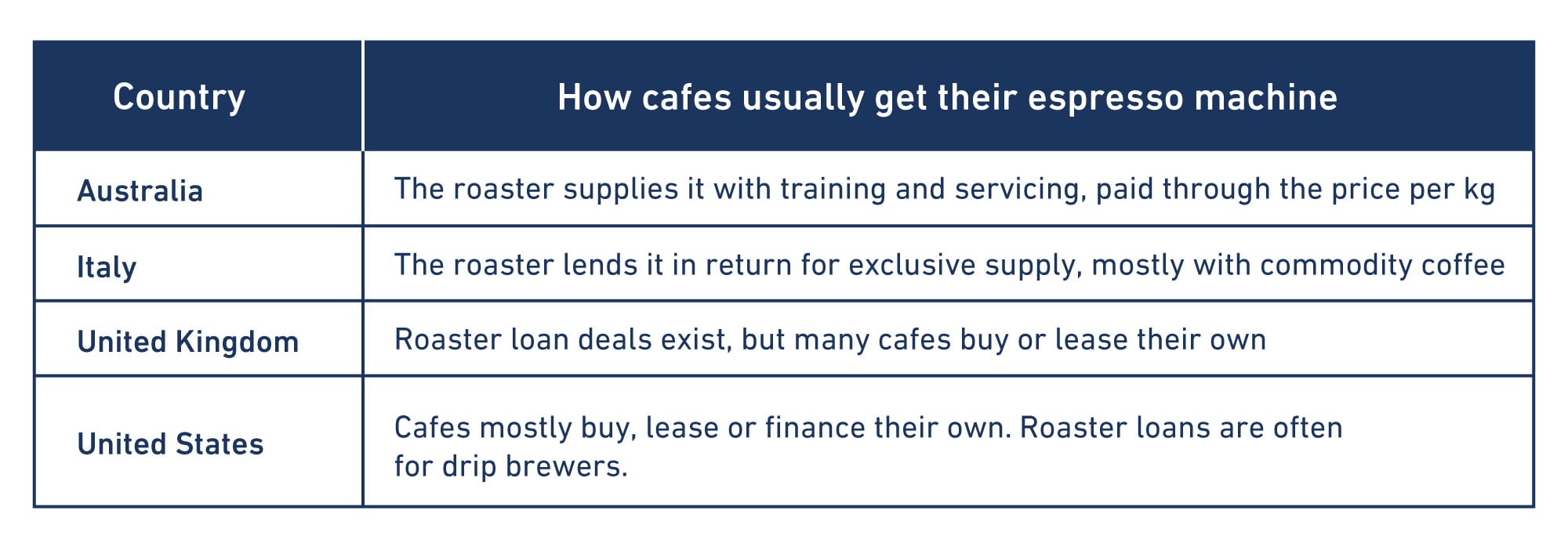
Sources: SilverChef (Australia), Il Salvagente, 2024 (Italy), Cheshire Vending (UK), My Coffee Explorer, 2026 (US).
The maths
Now let’s look at some numbers. The Australian average for a small coffee is around $5.07, depending on the data.
Our recommendation for a small specialty flat white is $5.50. Based on that, the numbers are stark. The figure below shows them.
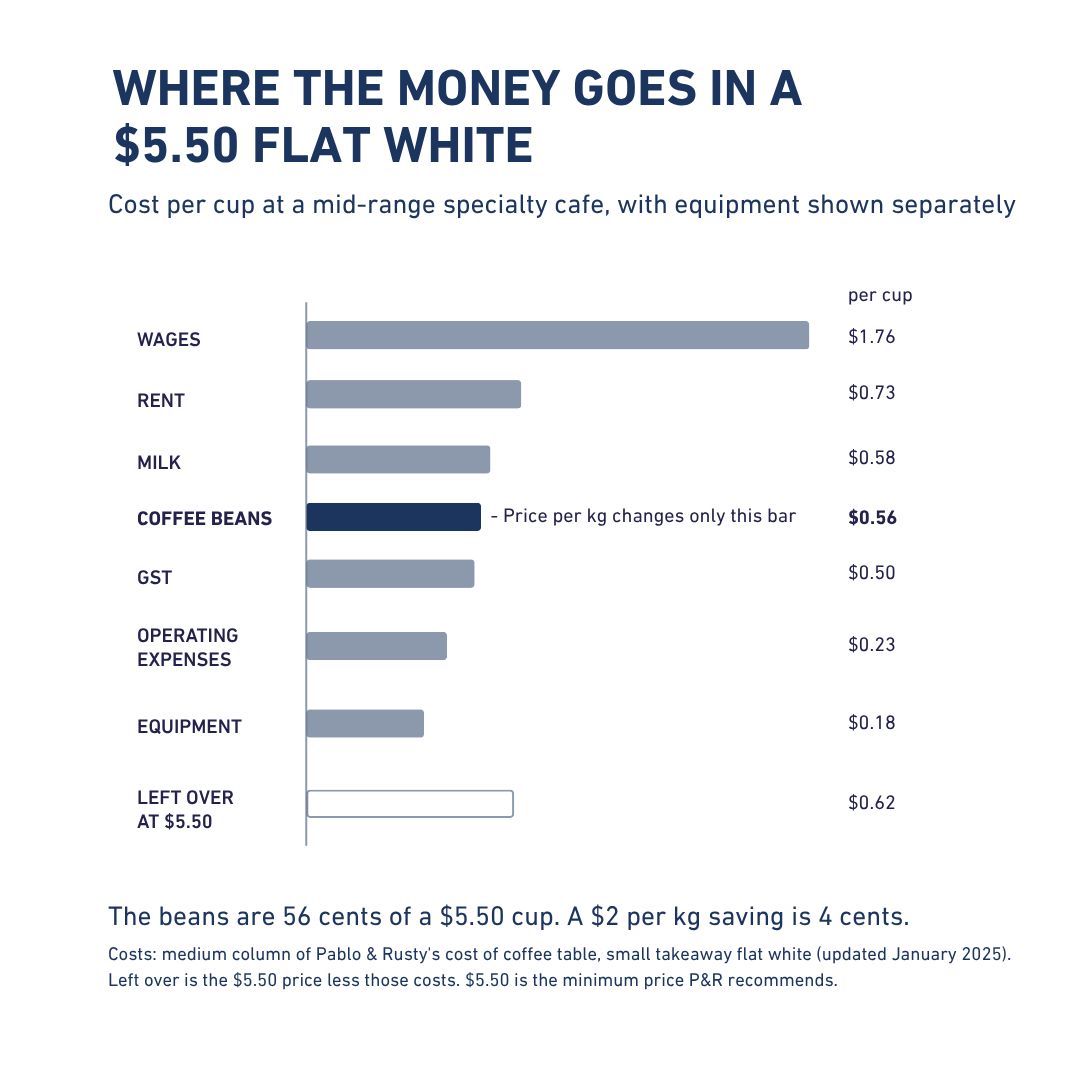
Here coffee beans are a small part of the cup, about 56 cents of the $5.50. Especially if you separate the equipment portion of that cost (i.e. what the cost of the beans would be if you bought your own equipment).
The major costs are wages and other inputs. Wages alone are estimated at $1.76 a cup.
This means that you may be saving $3 per kg but spending over $30,000 or more in extra wages across four years due to not having the right equipment, automation or workflow. Worse yet, you could be missing out on potential revenue.
Here are some numbers to get you thinking.
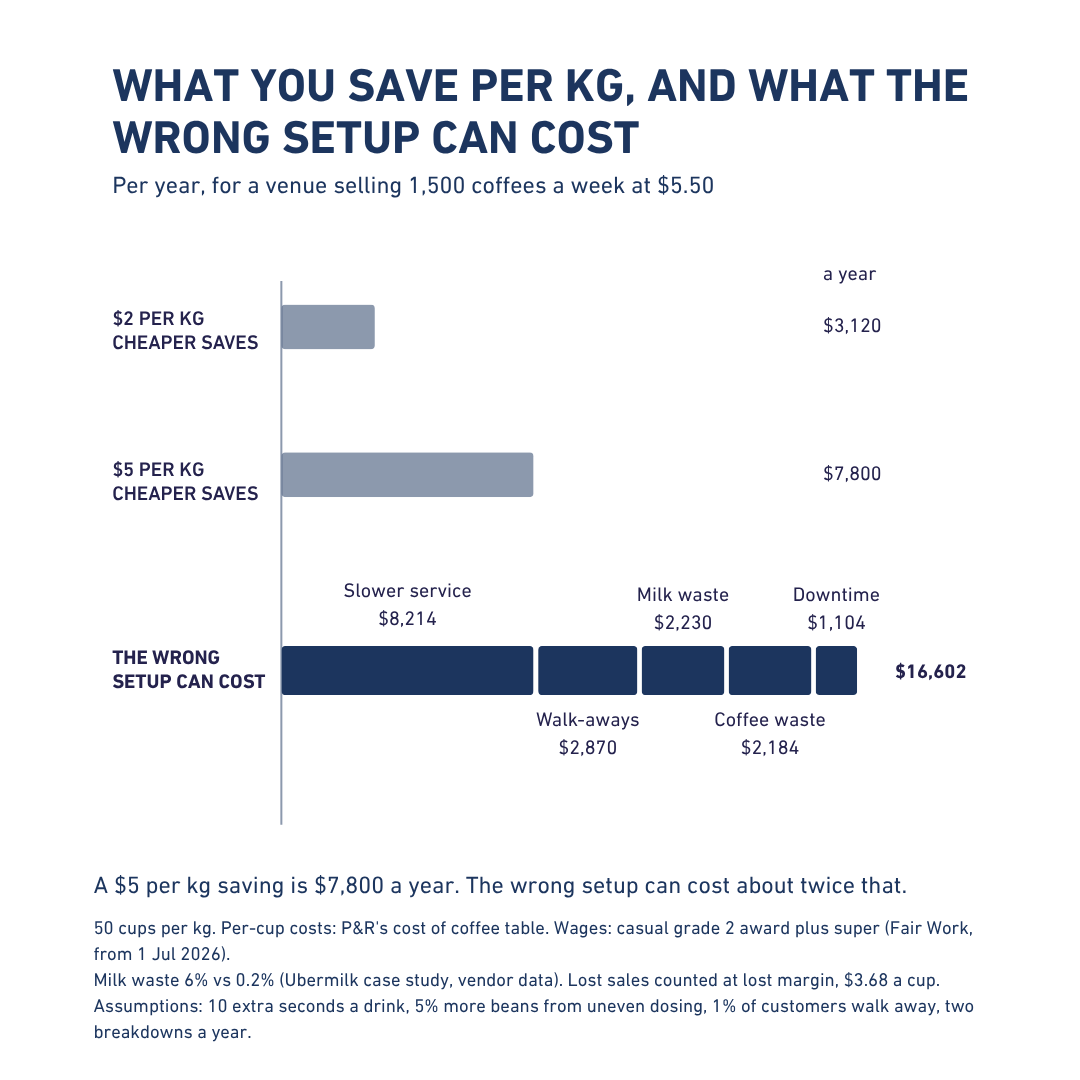
Take a venue selling 1,500 coffees a week, or about 30 kg. A $2 per kg saving is worth $3,120 a year. A $5 per kg saving is worth $7,800.
Now, assume the cheaper deal comes with the wrong equipment. Ten extra seconds a drink adds up to 217 paid hours a year. At the casual award rate plus super ($37.91 an hour), that is $8,214 a year (Fair Work pay guide, from 1 July 2026).
Add walk aways, coffee waste, milk waste and downtime, and the wrong setup can cost about $16,600 a year or more. That is more than double the $5 per kg saving.
Coffee
Coffee is the closest to our hearts. We are obsessed with it. And most Australians are too.
Coffee can vary vastly in taste and quality. Specialty grade is a minimum for us. However, the raw coffee is an ingredient. Someone can buy the same ingredients as a world renowned chef. However, they still cannot create the same delicious dishes.
Similarly, the quality and taste of coffee varies widely. Many roasters may buy cheaper beans, especially for their blends. There is nothing wrong with that if you are going for a more cost focused option.
However, even when two roasters are buying the same beans, the results can taste very different. The skill of their roasters, the quality of their roasting and blending equipment, the research and development, the consistency in roasting, the packaging and nitrogen flushing, and on-time delivery of recently roasted coffee all matter. So does using it within its peak window, on specialty coffee equipment, with a measured recipe and brewing parameters. Coffee that gets all this right will taste much better than one that misses even one of these steps.
Equipment
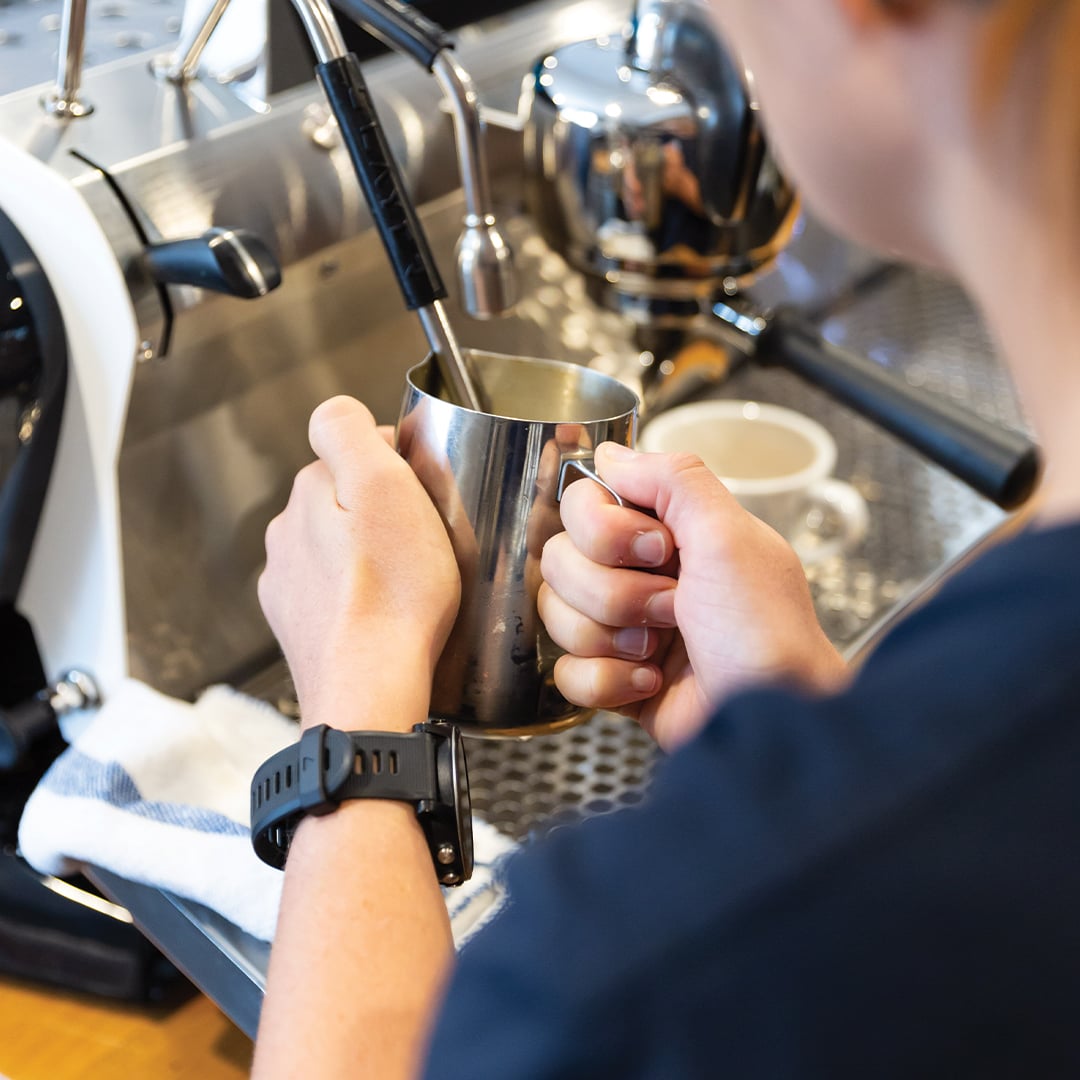
Equipment confuses a lot of cafe owners. Many believe that roasters give them the equipment for free. That is simply wrong. Even if your roaster offers you free on loan (FOL), it simply means the price is built into your coffee price per kg. Don’t believe us? Ask your roaster what your price would be if you bought your own equipment. It would be much less.
In one of our examples, it was $27 per kg instead of $33. Over eight years, the cafe that financed its own equipment came out about $40,000 ahead.
Due to this confusion, our preferred method is not FOL, as we believe it leaves cafes worse off.
However, if you are getting an FOL deal, you need to understand that an espresso machine can cost as little as $6,000 and more than $25,000. Then there are grind-by-weight grinders, automatic milk systems, brewers, taps and so much more.
The point is that the type of equipment and the quality of equipment differ vastly. Its price also differs. If your equipment is cheap, you might be paying a lot more for it elsewhere without realising it.
Training and support
Hospitality is a people business. Staff turnover is often high. Cafe owners have one of the hardest jobs in the world.
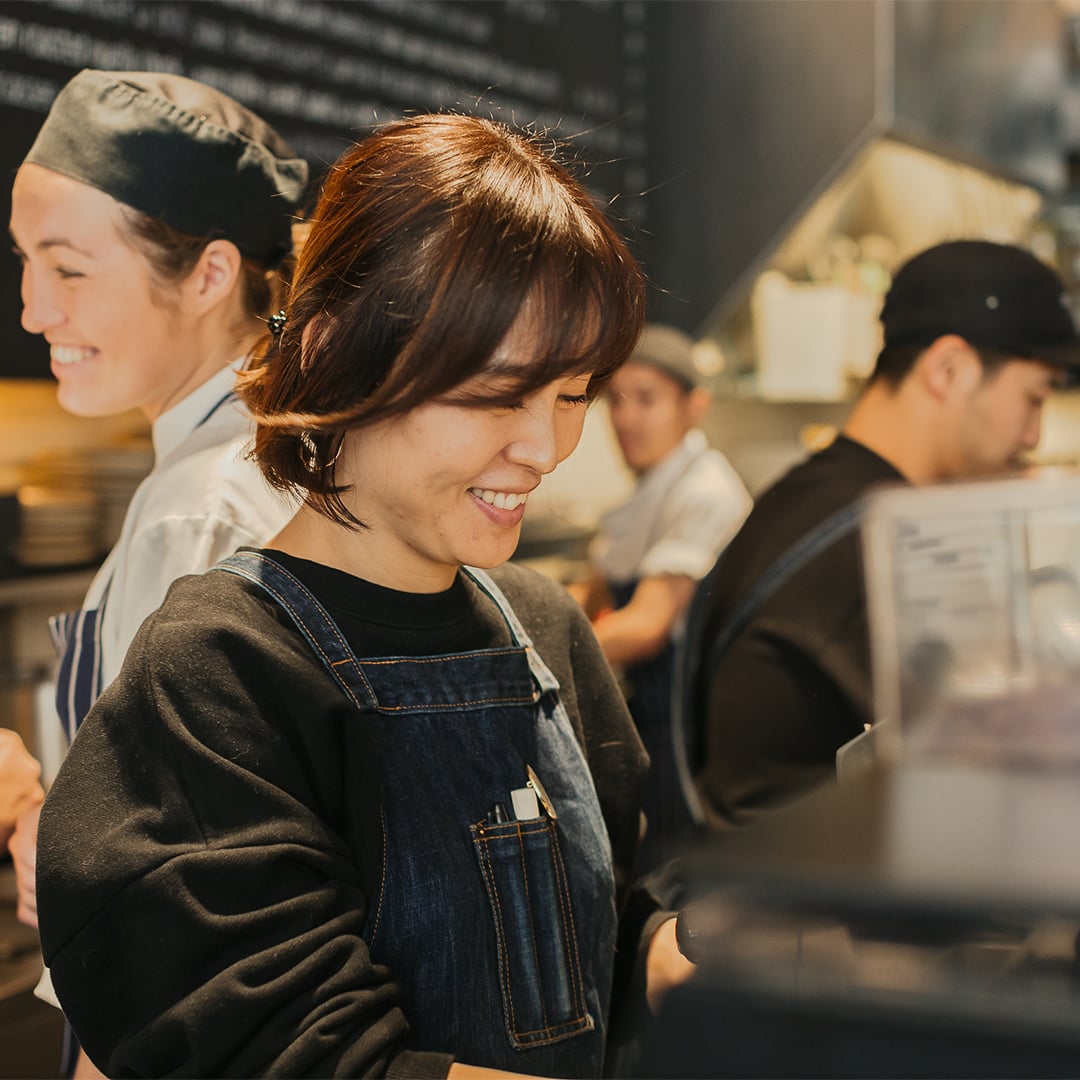
That is why we support our cafe partners in more than one way. We have two roles dedicated to each cafe partner.
A business specialist who works on the business stuff. Pricing, menu, marketing, retail shelves, staff culture and much, much more. Things that make your business better.
And a coffee specialist who works on the coffee stuff. Recipes, training, workflow, signature drinks, and so much more.
This does not show up anywhere on the invoice. But it makes a world of difference in what our cafe partners can achieve.
Servicing
What happens if the espresso machine goes down at 7.30 am on a Saturday?
This can lead to a lot of embarrassment and lost sales. Losing 150 morning coffees at $5.50 is $825 in sales. We often joke that the worst crisis in our business is if someone can’t make delicious coffee. Either because their machine is down or because they ran out of beans. And we work really hard to find the best responses in those situations. This is done through our team of amazing coffee and business specialists and a national network of service technicians.
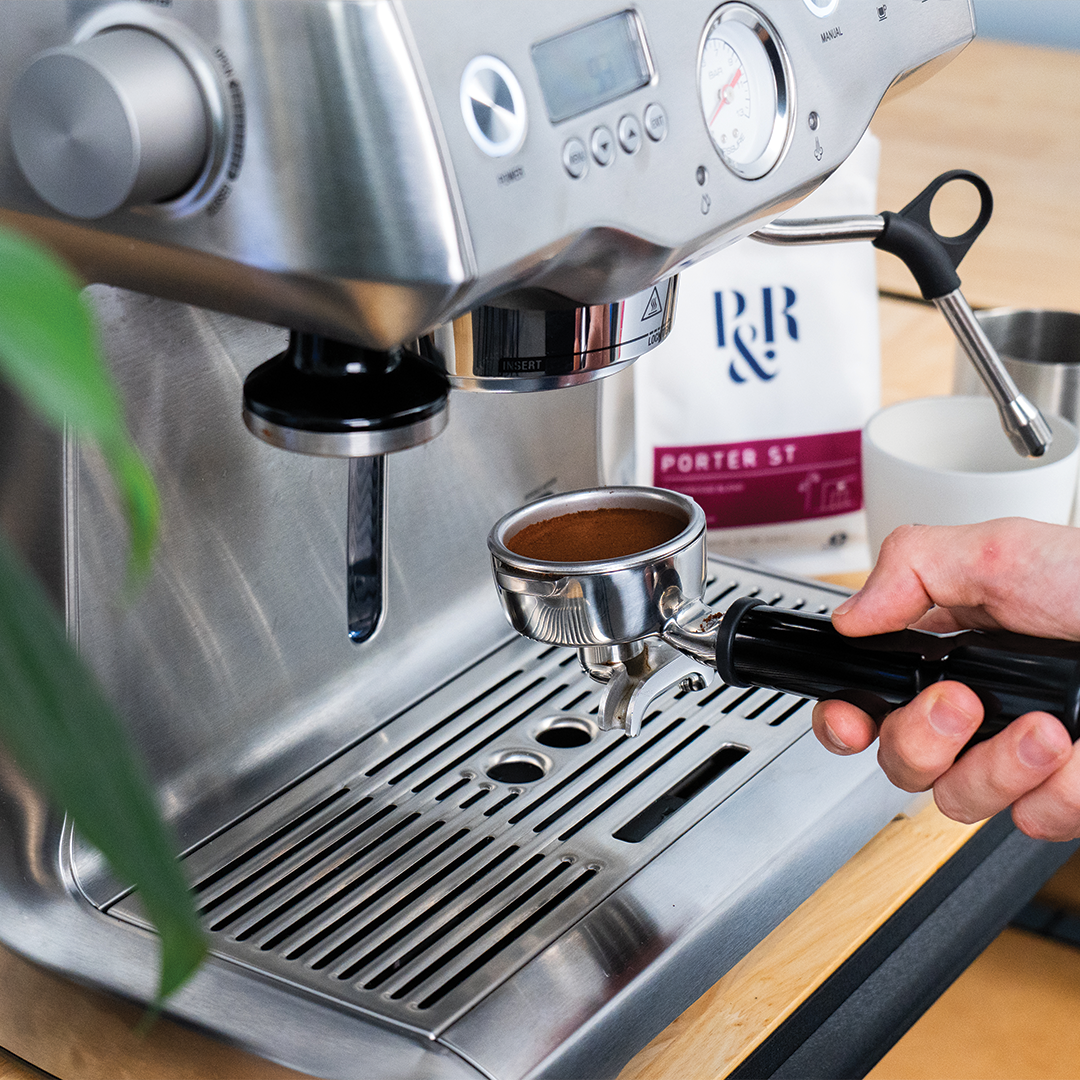
However, we also work hard to make sure we do proactive and regular preventative maintenance on the equipment, the grinders, the water filters and much more to ensure the machines are in great shape. We also train the cafe staff to have strict daily cleaning protocols and to be able to troubleshoot small issues virtually or themselves.
And when a breakdown does happen, we are quick to respond.
The rest: impact, sustainability, innovation, insights
The first four are important to have a great cafe. But to be a sustainable cafe for the future, more is needed.
Such as impact. Is your roaster a B Corp? A 1% for the Planet member (i.e. 1% of their revenue, not profit, goes to planet causes)? Do they prioritise sustainable initiatives and help you implement them also? Do they treat their staff, customers and suppliers as they would like to be treated? These are only a few things that are important.
What about innovation and insights, so that you can stay ahead of changing trends? We conduct annual research on coffee drinking habits and share these with our cafe partners. Insights such as automation, pricing, younger people drinking more cold and signature drinks, and much more. For example, cold coffee is now 68% of orders among younger customers. We also operate our own cafes and can intimately relate to the challenges cafe owners are facing.
We have a dedicated team that conducts R&D on the latest equipment and techniques and brings to our cafe partners what works for them in their context and constraints.
A great coffee partner gets you set up for today and tomorrow.
The questions to ask
So if you are choosing a coffee partner and looking at $ per kg only, here are some questions to help you choose better:
- Coffee and grade
- What grade is it, and what is in the blend? Is there robusta?
- Has the blend changed since green prices spiked?
- Can we taste it here, on our machine, with our milk?
- What do others say about their coffee?
- Is your coffee nitrogen flushed?
- Equipment
- What machine and grinders, and why these for our venue and staff?
- What is the RRP of each item? Is it new or refurbished, and how old?
- What automation is included, and what would it save us in labour and waste?
- Support and training
- What exactly is included, how often, and who delivers it?
- What happens when our staff turn over?
- What do your cafe partners say about you?
- Can we anonymously visit some of your cafe customers?
- Servicing
- How often is preventative maintenance done, and what does it cover?
- What is the response time in hours, in metro and regional areas?
- Is there a loan machine? Are call-outs and parts included?
- The rest
- Which certifications can we check on a public register?
- What sustainability initiatives do you run?
- Do you run your own cafes?
- Do you conduct or publish research?
- What have you brought customers in the last year beyond beans?
In conclusion
When you are choosing a coffee partner, you are choosing more than coffee beans. You are choosing amongst five or more categories.
We are not telling you how to choose. But we hope that you make an informed decision by considering all the categories and all the costs. Not just the ones you can see.
If you would like to learn more, talk to our cafe network team.