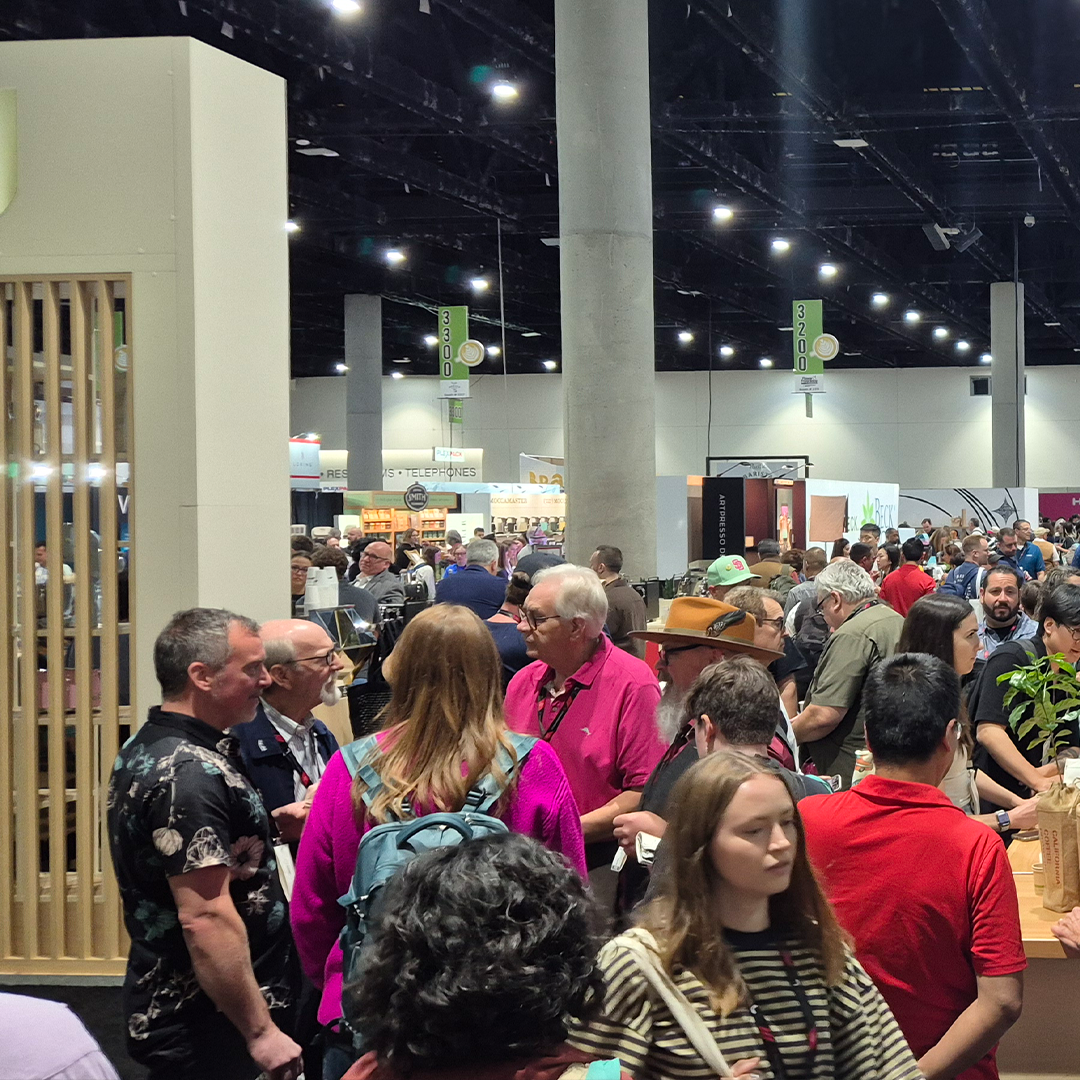
In April, I had the pleasure of attending my first North American WOC event in San Diego, USA. I spent 3 days trekking around the entire coffee expo to see what’s new in the coffee world. I also had the privilege of being a judge for the Best New Product (BNP) awards where i was able to get a close look at a few upcoming products in the coffee accessories category. After drinking tonnes of coffees, playing and interacting with lots of new coffee tools and toys and walking at least 5km around the show, I wanted to share with you a couple of equipment highlights, coffees that stood out to me and my experience of being a BNP judge.
There are always lots of new product launches and new coffee toys to play with. Sometimes it’s hard to narrow them down to what is practical and what is excess to need. So, I've done the hard work for you and will share with you the 3 pieces of coffee equipment I think are worth investing in or at least further investigation.
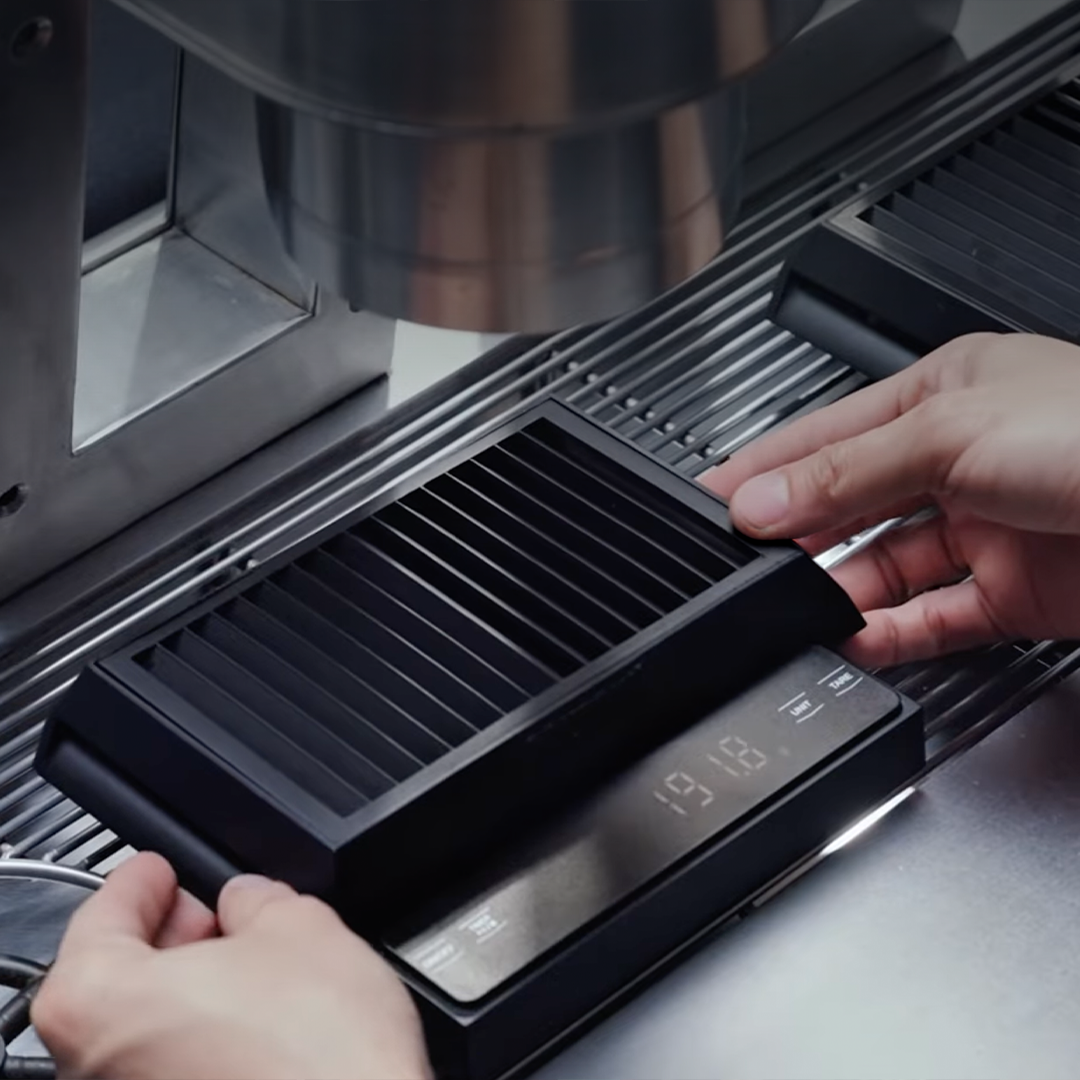
1. Squeaky Satellite Scale tray
This at surface level seem like a very simple and obvious accessory, and it’s probably true. But that’s also what makes it such a useful tool for espresso making. The Squeaky Satellite is simply and tray that fits onto your scales that you would use under the portafilter to measure your extraction weight precisely. The use of the tray means you won't need to move the scale in between shots, when you need to purge the group head. Hot water released onto your scales will eventually damage them and make them unusable. The Satellite fits snugly on your chosen scale and diverts the water to either side of the scale and into the drip tray. It’s designed with an anti-splash ribbed top surface, sloped drainage and air gap. These all help to manage the mess and flow of water and help to protect the load cell in the scale from damage due to excess heat.
P&R bought one and find it super useful for dialling in any espresso coffee. In particular we use it when testing out any new coffee and espresso profile. Give it a go!
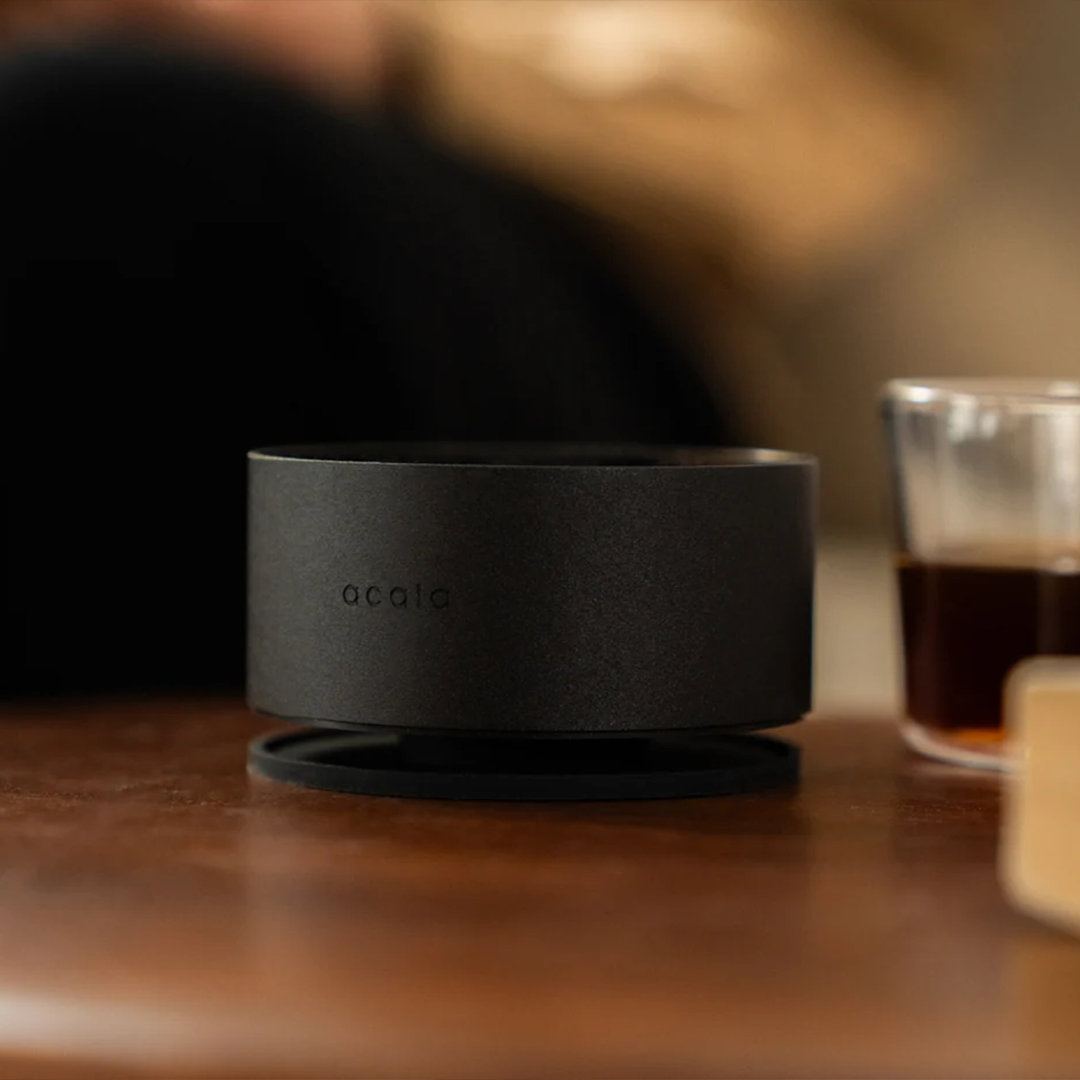
2. Acaia Horizon pressure modulation device
At first this tool seems too good to be true. You’d absolutely be forgiven for thinking so. But after being on the receiving end of a demonstration I can tell you it’s absolutely true. The Horizon is a device that sits over your brewed coffee device and when engaged changes the atmospheric pressure of the headspace. While I’m not an expert on exactly what’s happening to the beverage itself, I can say for certainty that the positive effect it can have on post extracted brewed coffee is real. In the demonstration we first tried a filter coffee brewed in a V60, it was a coffee that expressed a high amount of acidity through fermentation. The untreated half of the brew was lively in acidity and some good sweetness but finished with some lingering dryness and astringency. The other half of the brew that was treated presented a more refined acidity which balanced better with the sweetness and most surprising of all the lingering astringency and dryness was mostly non-existent.
This was kind of a wow moment. The possibilities of being able to modulate some of these characteristics of brewed coffee are endless. We then tried an espresso that went through the same experiment. While the difference wasn’t as pronounced there was definitely a more balanced quality to the treated espresso in comparison. This is a very unique tool that has a very specific application. I’m not sure of its place in a cafe setting. Possibly for those filter coffees that you’re putting extra time into to manually brew and have a slightly higher price tag to hopefully enhance the consumer experience. I see this as a tool that could be widely adopted in the filter brewing competitions and possibly the barista comp.
We don’t currently have one of these to play with but are waiting patiently for them to be restocked online in Australia soon. Really looking forward to exploring all the possibilities.
We're also big fans of the Acaia Lunar scales, you can check them out here.
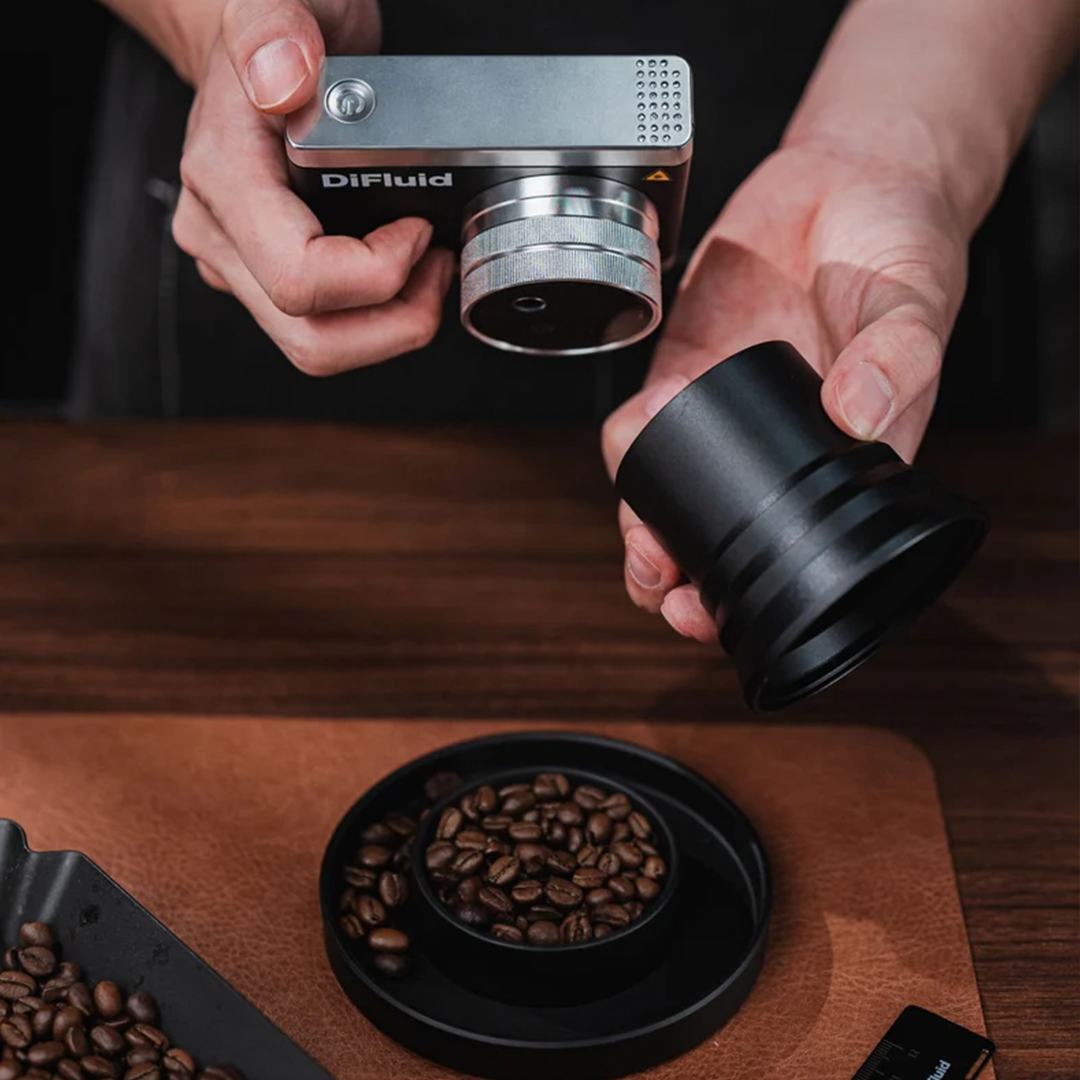
3. Difluid Omniflux live roast colour tracker
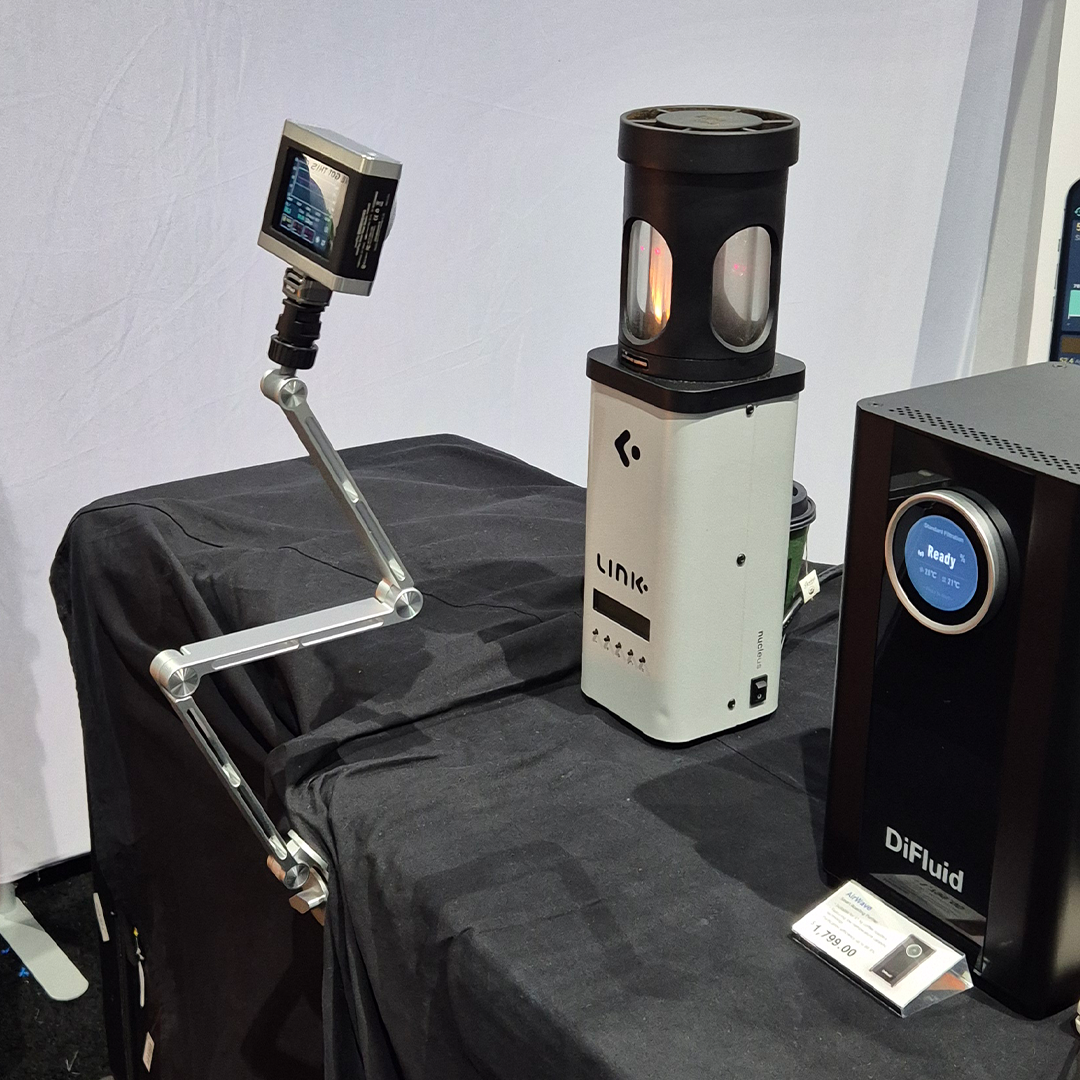
This one sits in a separate category. The Omniflux is a colour reading tool for roasting. Where this differs to others on the market is it tracks external colour live along with being able to detect first crack. Some of the most important pieces of data you can analyse when assessing coffee is the roast profile and roast stages. The roast stages are basically defined by the external colour of the coffee and the point in which first crack occurs.
The first stage id the “drying phase” this is where the initial moisture is removed and is finished when the external colour of the green bean is yellow. The second phase is the Milliard phase; this is where reactions occur between sugars and amino acids and the stage is signalled finished when first crack is observed. This creates the brown colour of coffee and develops much of the sweetness in coffee. The third phase is the development phase; this begins when first crack is observed. First crack is an audible reaction to pressure building inside the bean and shapes what the final flavour profile and taste balance will be. Now all these phases don’t necessarily stop and finish at these points but the references we create provide the shape to the profile of the coffee. This device aims to quantify these more consistently in the hopes of having more accurate data to be able to adjust roast profiles with more control.
Now it wasn’t all just equipment at the WOC San Diego! There was more coffee that you can poke a stick at. I definitely had more coffees than I have time to talk about them, so I wanted to share a few highlights.
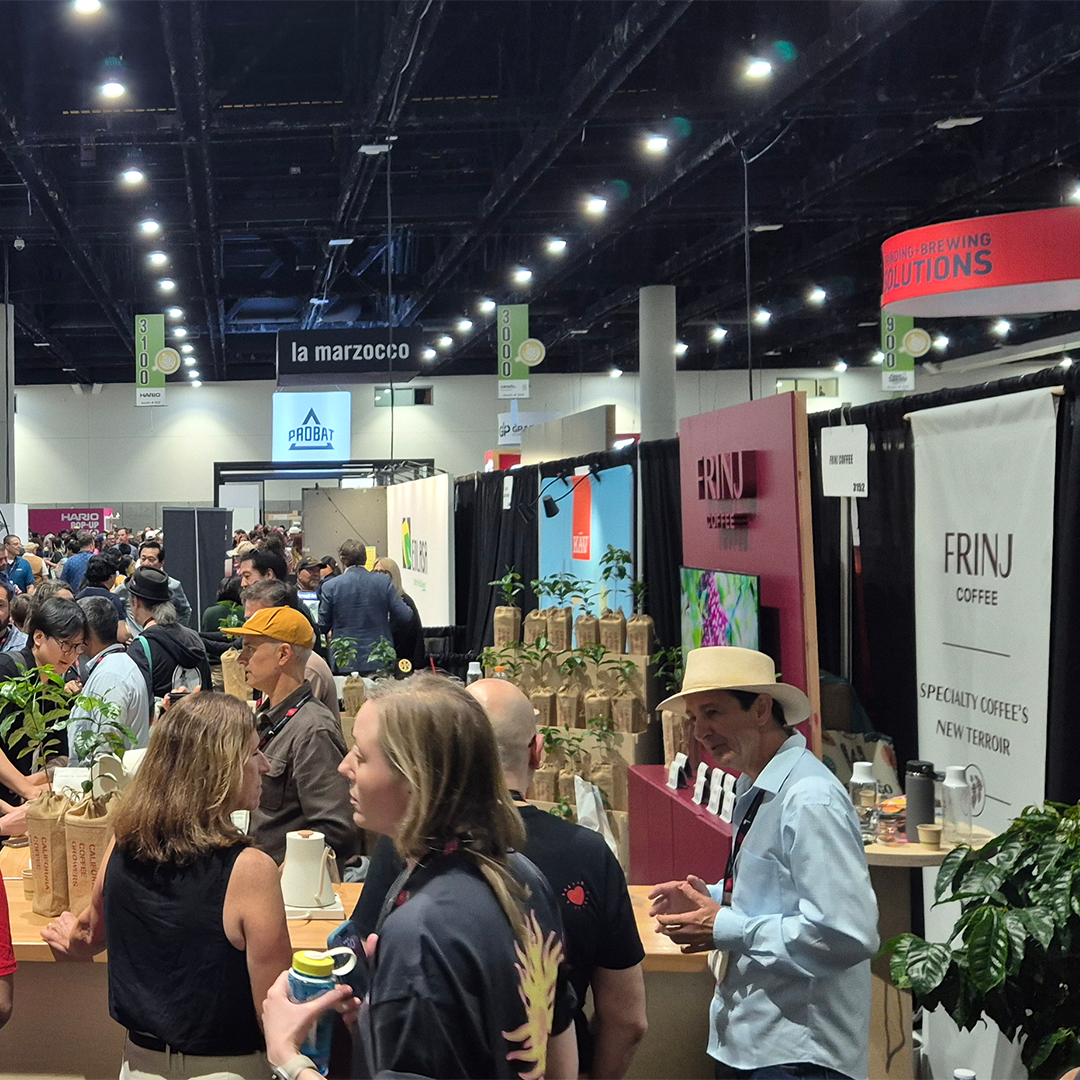
1. California Geisha – Frinj Coffee
This was the most unexpected coffee that I tasted during the entire show. I’ve know for a while that there are coffee farms in the US and more specifically California, but i didn’t expect there to be a Geisha and for it to be of such a high quality. No offence is intended here but It’s not a traditional coffee growing region and with the Geisha variety being so hard to grow and to yield a decent quality from I hadn’t thought it would produce the coffee it did. It really speaks to the work that Frinj coffee do to produce and process excellent coffees in an untraditional coffee growing area.
2. Peru SL 09 – Vela Ethan coffee traders
This was one of the very first coffee I tasted at the event. Vela Ethan are a coffee trader that predominantly export/import coffee from Peru. Rita who runs the operation I met originally back in 2023 on the Nicaragua COE Jury. So, when I found out she would have a coffee cupping in the roaster's village, I made sure to go and see her first thing. There were about 8 coffees on the table but the one that stood out the most was an SL9 variety grown in the mountains of Peru.
This had a very distinct florality to it, very reminiscent of the popular Gesha variety. In fact, it’s known locally as “Inca Gesha” for the fact it has some similar tea-like qualities and intense floral notes. But being an SL variety, we know it has originated from a single tree selection sourced from Scott Laboratories in Kenya. The origin of where the tree selection was made is unknown, but many believe it to be closely related to coffee varieties grown in Ethiopia. This seems the most likely case as it shares some very similar characteristics to some Ethiopian Heirloom varietals.
This had a very distinct florality to it, very reminiscent of the popular Gesha variety. In fact, it’s known locally as “Inca Gesha” for the fact it has some similar tea-like qualities and intense floral notes. But being an SL variety, we know it has originated from a single tree selection sourced from Scott Laboratories in Kenya. The origin of where the tree selection was made is unknown, but many believe it to be closely related to coffee varieties grown in Ethiopia. This seems the most likely case as it shares some very similar characteristics to some Ethiopian Heirloom varietals.
Best New Product awards
Through all the coffees that I tasted and meeting coffee people from all over the globe I proudly got to take part of the “Best New Product” (BNP) awards that took place before and during the show. Some of the equipment I’ve already talked about but there were a lot of excellent tools and ideas that I got to experience. Being one of the judges for the category of coffee accessories, happened over a few different stages to make sure that the right people/equipment were rewarded for their innovation.
The Best new Product awards are a great chance for equipment suppliers, innovators and creators to get their products in front of the global coffee community. The awards are spread across several categories including, coffee accessories, coffee consumables, Consumer preparation and serving equipment, commercial preparation and serving equipment and open class. The category I was responsible for judging was the coffee accessories category.
The first stage to this was a calibration. As there were many judges from all over the world partaking this was held online during a 1-hour session. We were introduced to what the awards were, what they stand for and what we needed to do to find the winner. We were then taken through what was required at each stage and how judging would take place. The judging sheet is comprised of 7 different assessment sections like innovation, sustainability and practicality of use. We were then briefed that the first round of judging would be completed online prior to arriving at the WOC San Diego.
The first round involved using the purpose-built platform to read the proposal and pitch from each of the entrants. Giving enough time to this stage and really getting to understand each product and their vision for was very crucial here because it was from this stage that would determine the 4 finalists and who would get to pitch in-person to the 3 category judges.
The final round and in-person pitch was held at the WOC Sandiego in the awards very own judging and presentation room. One by one each of the finalists came through with this being their final chance to express their vision for their product.
First finalist – Acaia Horizon
This was also one of my equipment highlights for the show. They came in and demonstrated what modulation of atmospheric pressure would do brewed coffee. The device simply sits over the brewed coffee, seals the vessel and creates negative pressure. It’s during this process that the final beverage can be manipulated. Acidity can be tamed; sweetness can be heightened and bitterness and dryness can be cleaned up. If used in the right way you could essentially help some shortcomings with roast and or brewing, theoretically. What an interesting and exciting device.
Second finalist – Squeaky Satellite scale tray
This also happened to be one of my other highlights off the show. A simple idea but designed and executed so well. The tray sits on your scale on the espresso machine drip tray so you’re able to measure the output of every extraction without having to remove the scale every time you want to purge the group head in-between shots. This i use almost daily in the coffee lab to manage any espresso tastings.
Third finalist – Digitamper
This electronic tamping device was a stroke of genius. This handheld tamp has an active load cell within the handle allowing you to see in real time the actual force used every time you tamp your puck. Perfect to have a consistent, portable option to maintain weight consistency across many extractions. Also perfect for training any barista on how to distribute the perfect amount of weight to the coffee puck time after time.
Fourth finalist – Outln Claro2
The Claro2 was an interesting take on something every espresso workflow needs: a reliable scale. What made it stand out was how it simplified the process by combining the scale with a food-safe stainless-steel dosing cup, so the same vessel could weigh beans, transfer them to the grinder, collect grounds and even receive the final espresso. It also had a small pouring spout, clear upward-facing display and splash-resistant design, making it practical for compact or travelling coffee setups. For me this felt like a smart evolution of the scale category. It might not be something every café needs on bar, but for anyone wanting a neat, portable and low-mess espresso workflow, it made a lot of sense.
And the winner is....
Squeaky!
With their simple yet very practical device paired with a very charismatic and joyful presentation the 3 judges couldn’t go passed this as the category winner. Perfect for those cafes who want the precision of controlling extraction weight without compromising on workflow
Runner up ....
Acaia Horizon!
What a super interesting piece of equipment which must have only been close behind in judge's votes. Being able to experience firsthand what the device could do was quite astounding and something that i look forward to investigating further when I have the chance.
Overall, WOC San Diego was a brilliant reminder of how broad, creative and energised the global coffee industry continues to be. Between the new equipment, unexpected coffees and the chance to take part in the Best New Product judging, it was a packed few days that left me with plenty to think about and even more to follow up on. For anyone thinking of attending one of these events I would highly recommend, even more so the opportunity to be a part of the BNP awards and get an up-close look at some of the best new equipment coming into the coffee industry.