Home espresso has changed dramatically over the past decade. What was once reserved for commercial cafes and coffee competitions is now finding its way onto kitchen benches across Australia. Better grinders, more stable machines and increasingly capable home setups mean prosumer coffee drinkers now have more control over flavour than ever before.
Pressure profiling has also become increasingly accessible within the home espresso space.
Rather than running a flat nine bars of pressure from start to finish, pressure profiling allows you to gradually shape the extraction throughout the shot. Small changes in pressure can dramatically affect sweetness, body, clarity and balance in the cup.
-v1780280479171.png)
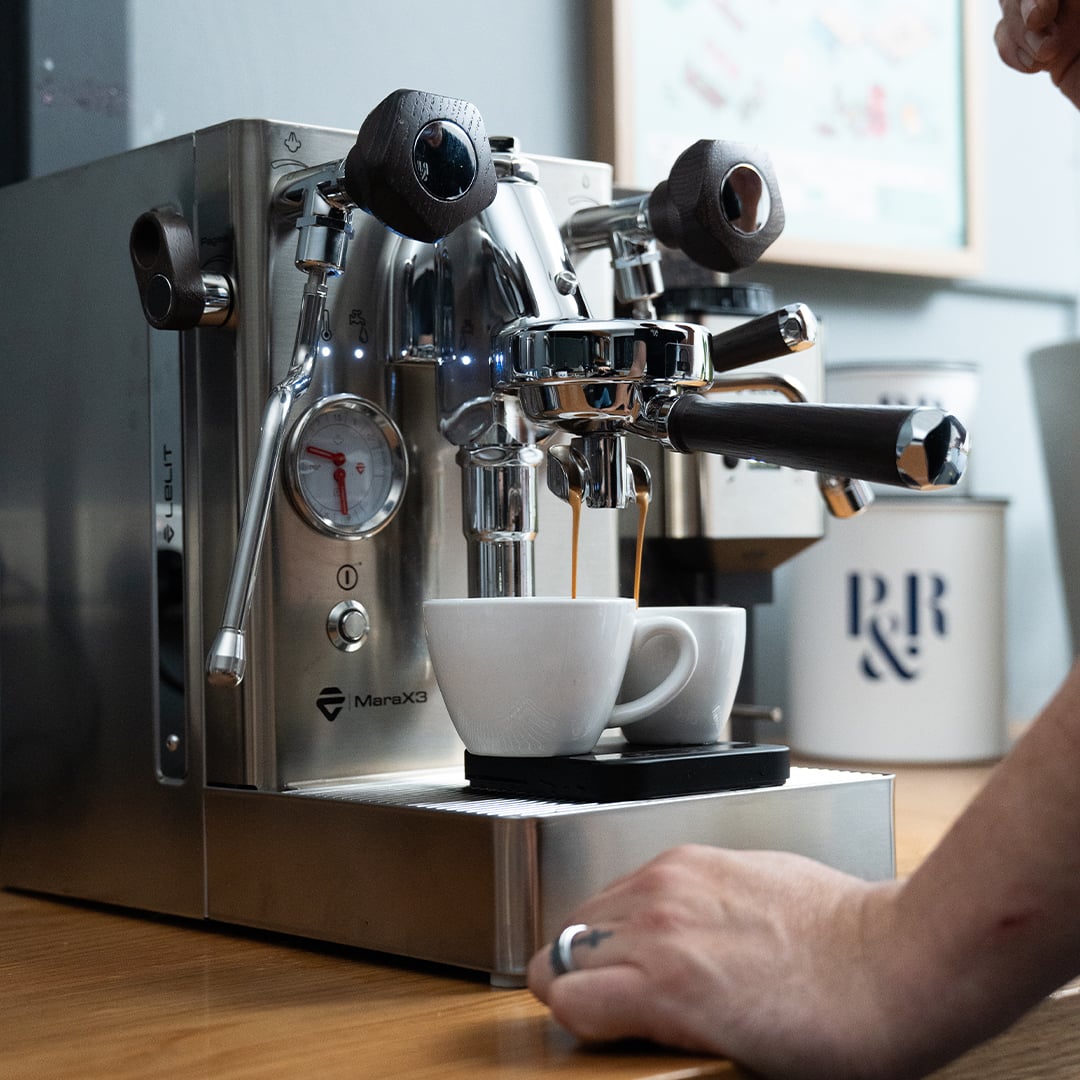
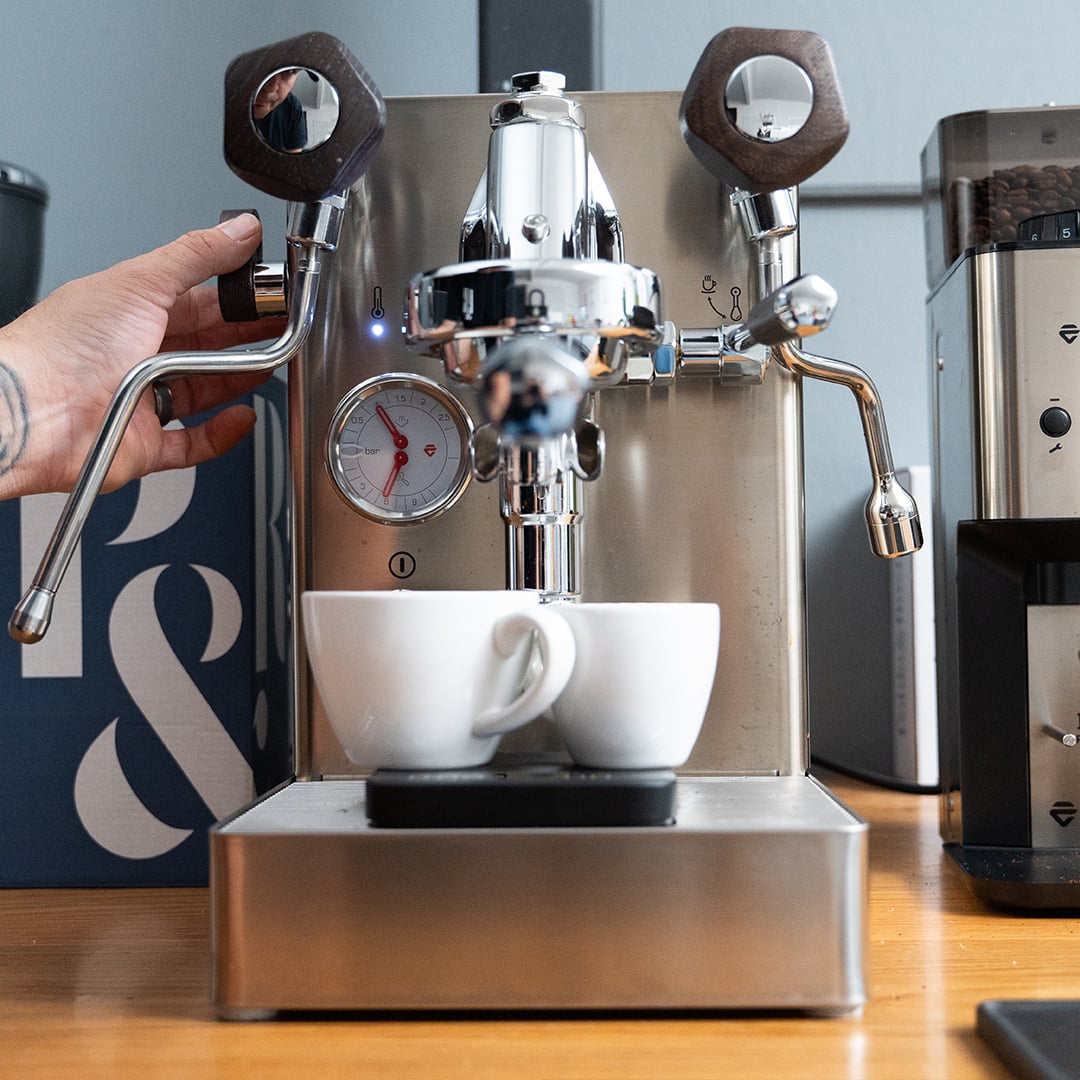
We’ve been fortunate to have the Lelit Mara X 3 on the bench in our Roastery Training bar for the last few weeks. An opportunity to play around with pressure profiling on a machine design for the home user.
Needless to say, our Team has been impressed and always love the opportunity to play with some new equipment.
Our goal was to create three recipes for our core blends Porter St, Pioneer and Trailblazer while also exploring how pressure influences flavour in a practical home brewing environment.
What stood out immediately was how refined the Mara X3 workflow felt. It was surprisingly quiet throughout extraction, even with the pump fully engaged. Anyone who has owned a home espresso machine knows how quickly an early morning coffee can wake the rest of the house.
Combined with the compact footprint and the classic E61 grouphead looks. The machine is really well-built, with some considered, stylish timber accents. The temperature remained stable despite considerable volumes of coffee being brewed and milk being textured. All around, a great machine for the serious home espresso drinker.
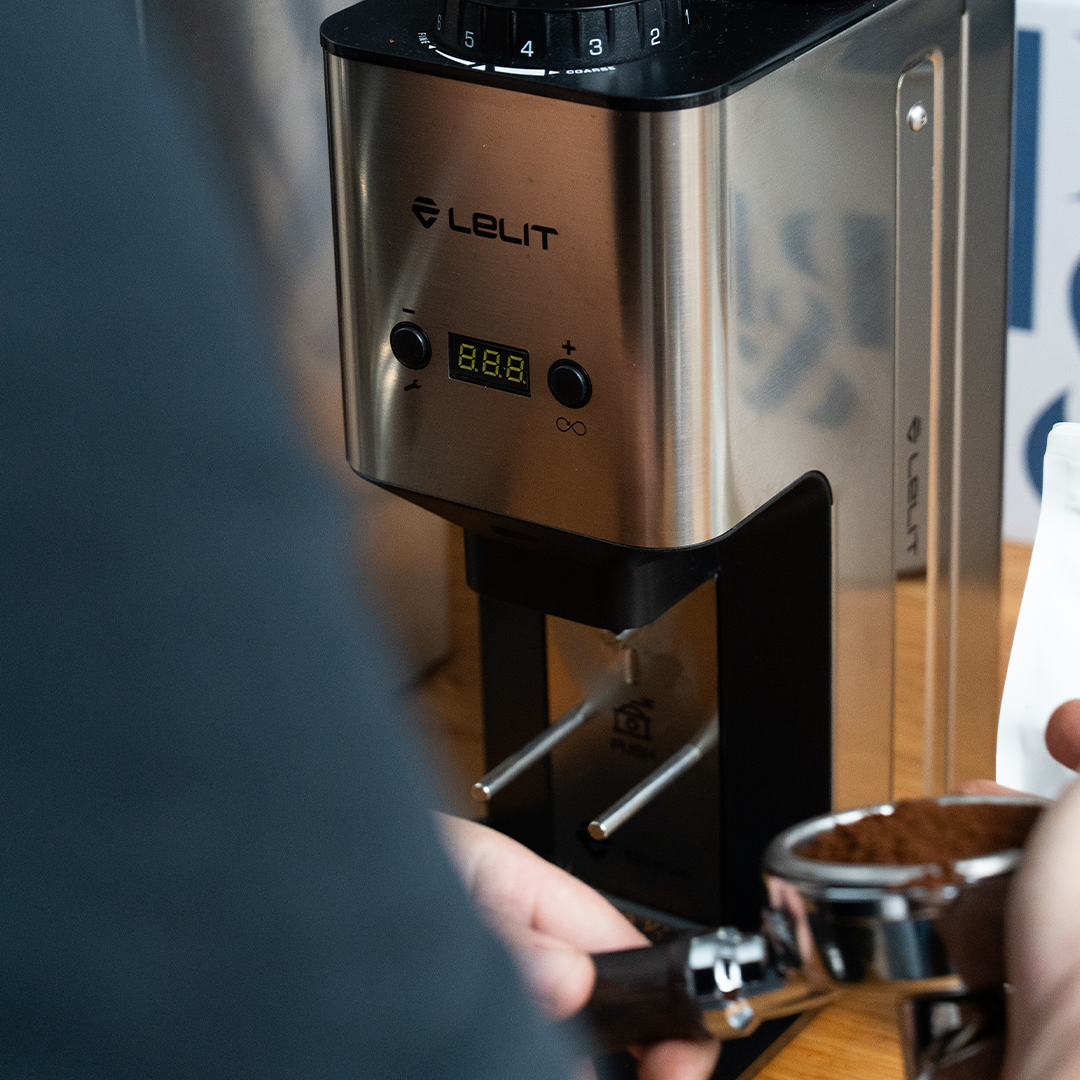
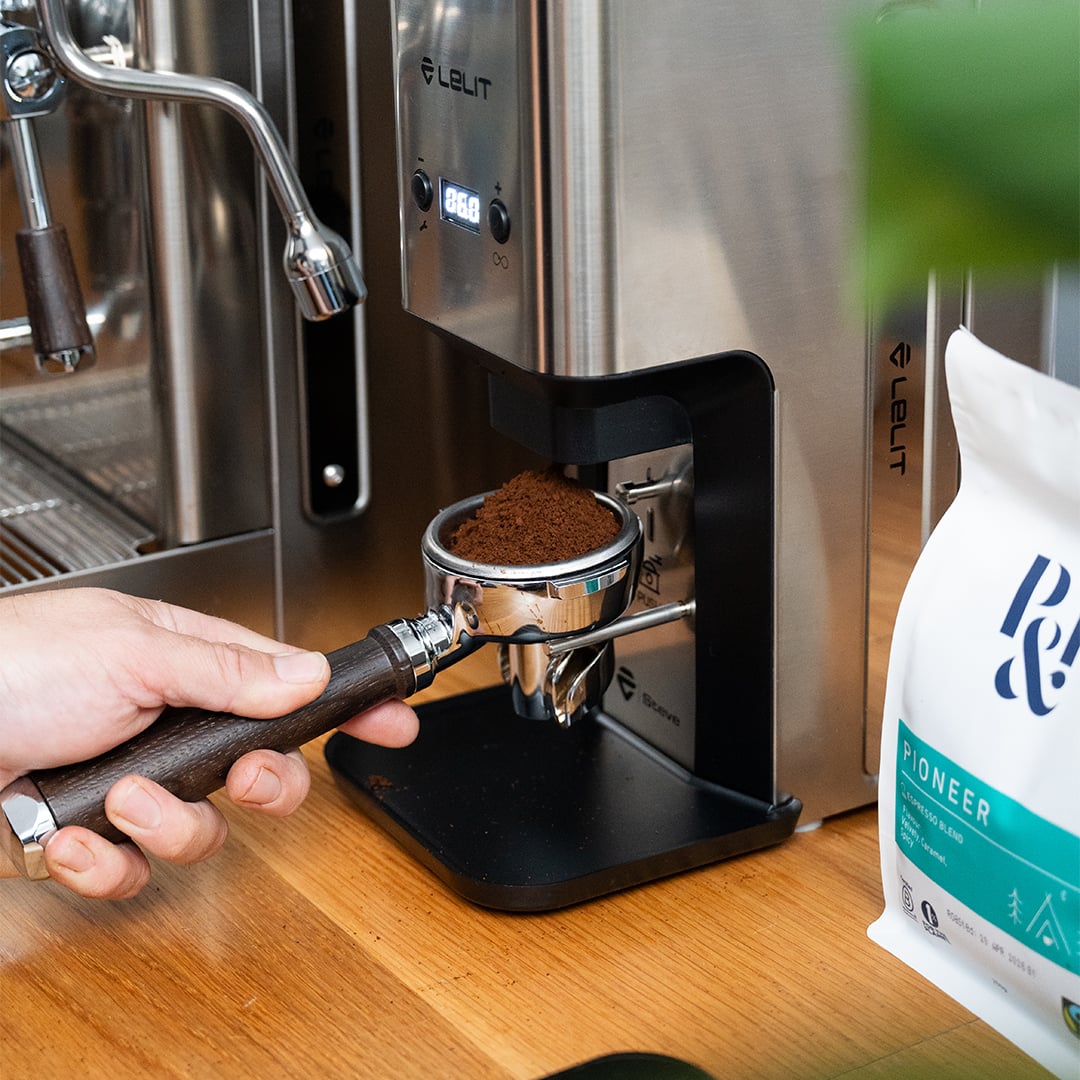
The Lelit Steve grinder was the perfect pairing for the test. Like its machine counterpart. It’s compact, stylish, quiet and would be a great addition to any home bar set-up. Its 64mm flat burr set delivered excellent grind consistency across all three blends, while the stepless micrometric adjustment made small recipe changes easy to dial in without overcorrecting between shots.
What is pressure profiling?
Pressure profiling sounds modern, but the idea itself is older than many people realise.
The first espresso machines with variable pressure were spring lever machines from the late 1940s. As the lever released, pressure naturally declined throughout the shot. Later, pump-driven machines standardised a flatter nine-bar extraction profile because it was faster, easier and more consistent for busy cafes.
For decades, flat nine bar espresso became the default. Not necessarily because it was proven to be ideal, but because machine technology made it practical.
Modern prosumer machines like the Lelit Mara X3 are helping bring that control back into the hands of coffee drinkers.
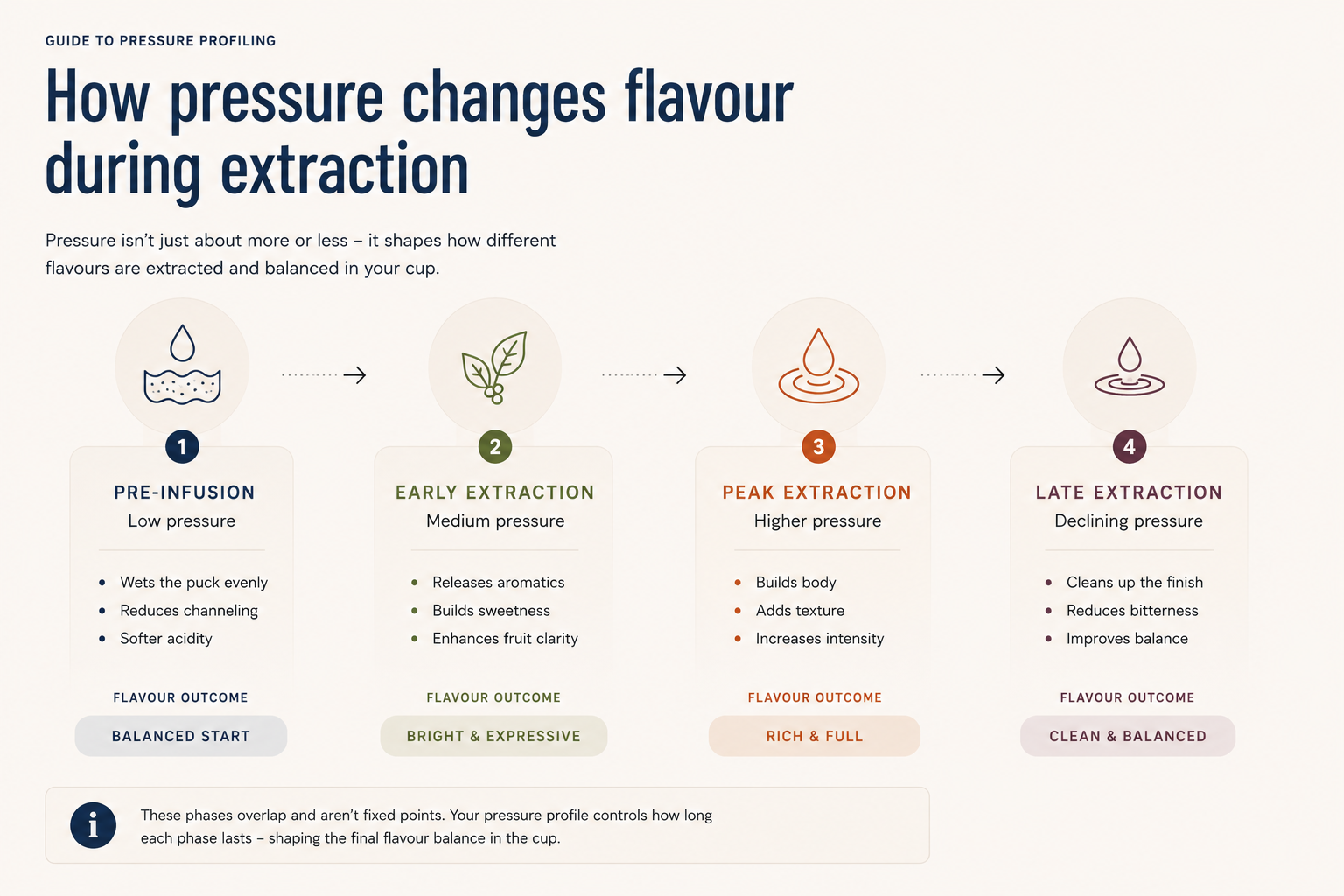
Instead of immediately applying maximum pressure, pressure profiling allows extraction pressure to build more gradually during pre-infusion before ramping into the main extraction phase. In practical terms, this gives baristas and home brewers more control over how flavour is extracted from the coffee bed.
Lower pressure during the early phase of extraction can help reduce channelling and harshness, while controlled ramping later in the shot can improve sweetness, clarity and texture.
In simple terms:
- Flatter profiles often increase body and intensity
- Declining profiles can improve clarity and sweetness
- Gentler pre-infusion can create more even extractions
- Aggressive pressure too earlt can increase bitterness and astringency
Our testing setup
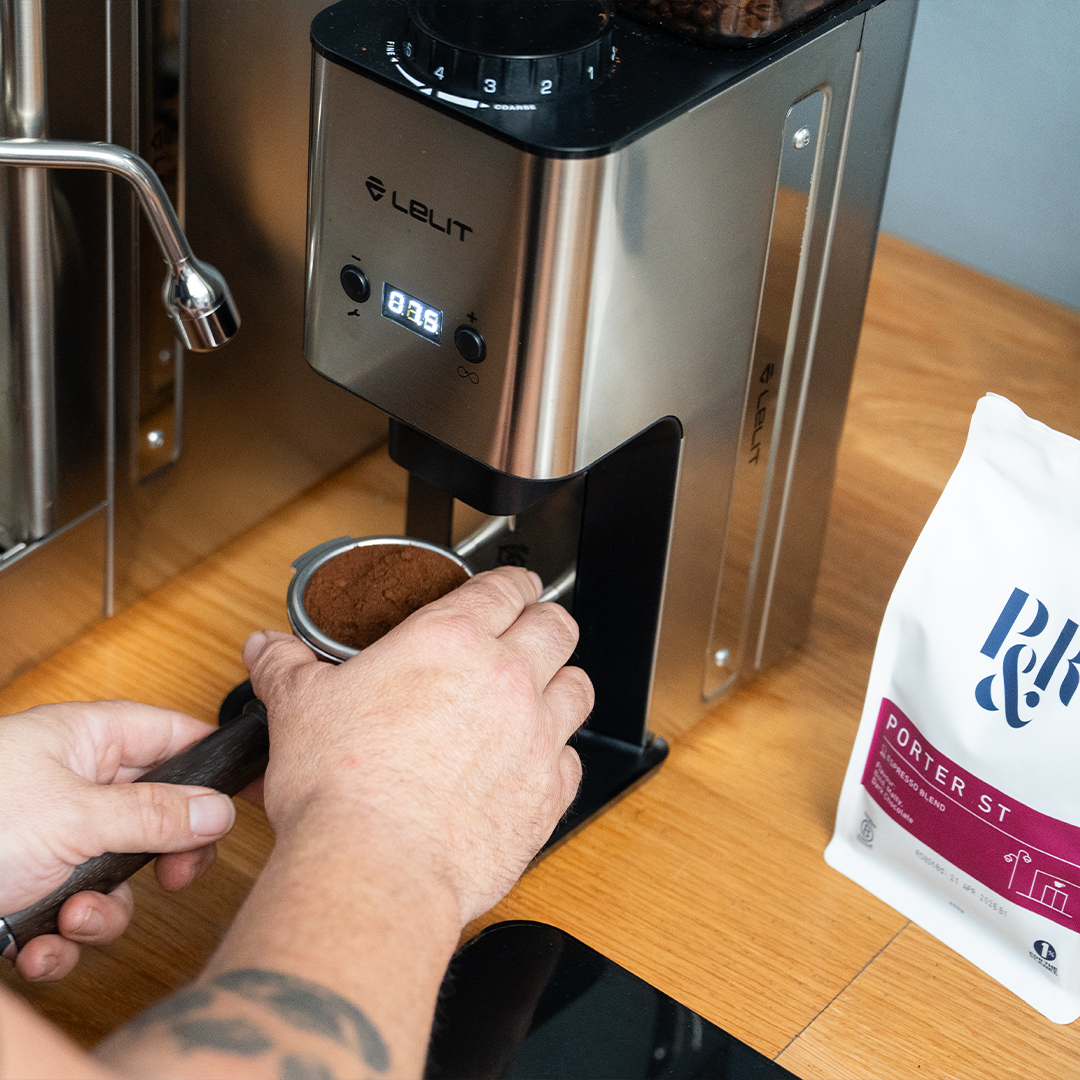
All testing was performed using the Lelit Mara X3 paired with the Lelit Steve grinder.
We tested across multiple roast styles, extraction ratios and pressure curves using Porter St, Pioneer and Trailblazer. During testing, we used reverse osmosis water with espresso-focused remineralisation.
It is important to note that these recipes should be treated as starting points rather than fixed rules.
Variables such as:
- water composition
- grinder calibration
- coffee age
- ambient temperature
- puck preparation
- basketselection
can all significantly influence extraction and flavour.
The recipes below reflect the results we preferred during testing, but your ideal recipe may vary depending on your own setup and taste preferences. Of course, we weighed our dose and extraction using scales. And in case you don't know why you need to invest in scales, you should read this article.
Porter St
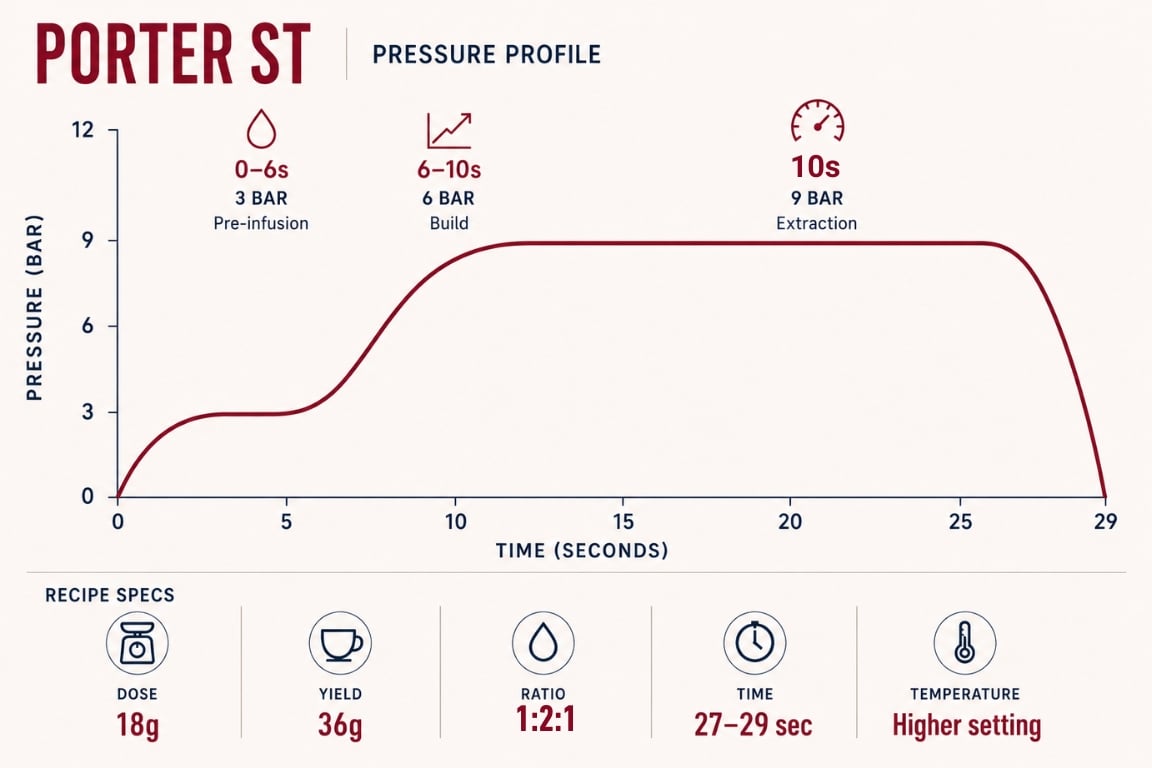
Porter St responded particularly well to a slower and gentler pre-infusion phase. The extended lower-pressure ramp helped increase sweetness and body while keeping the finish balanced and rounded.
The higher temperature setting also helped reinforce the blend's milk chocolate and nougat characteristics, particularly in milk-based drinks.
Recipe
- Coffee in: 18g
- Coffee out: 36g
- Ratio: 1:2.1
- Time: 27 to 29 seconds
- Temperature: Higher setting
Pressure profile
- 0 to 6 seconds: 3bar
- 6 to 10 seconds: 6bar
- 10 seconds to finish: 9bar
In the cup
- Milk chocolate
- Vanilla sweetness
- Light nougat finish
- Rounded body
- Excellent milk performance
Pioneer
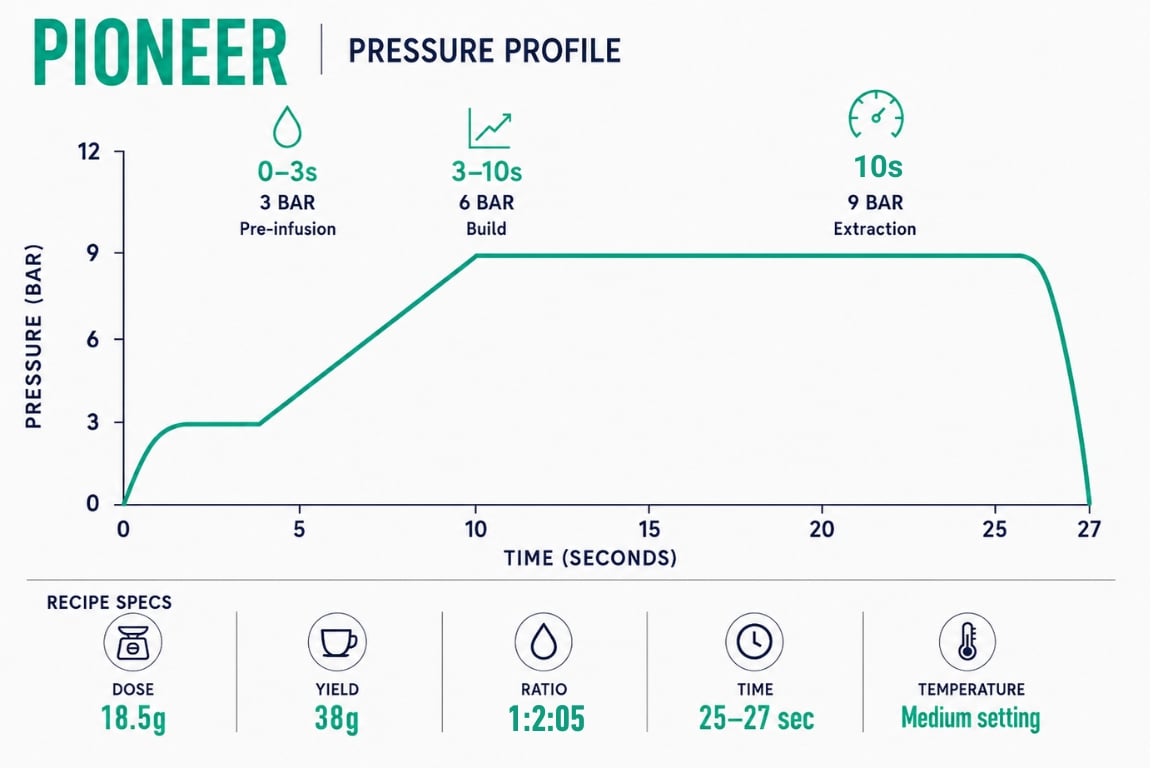
Pioneer benefited from a slightly shorter low-pressure phase and a marginally higher yield. Increasing both the dose and output helped open up clarity while maintaining sweetness through the middle of the cup.
The softer pressure ramp also helped maintain balance without pushing bitterness too far into the finish.
Recipe
- Coffee in:18.5g
- Coffee out: 38g
- Ratio: 1:2.05
- Time: 25 to 27 seconds
- Temperature: Medium setting
Pressure profile
- 0 to 3 seconds: 3bar
- 3 to 10 seconds: 6bar
- 10 seconds to finish: 9bar
In the cup
- Soft caramel
- Honeycomb sweetness
- Balanced acidity
- Clean finish
- Rounded sweetness
Trailblazer
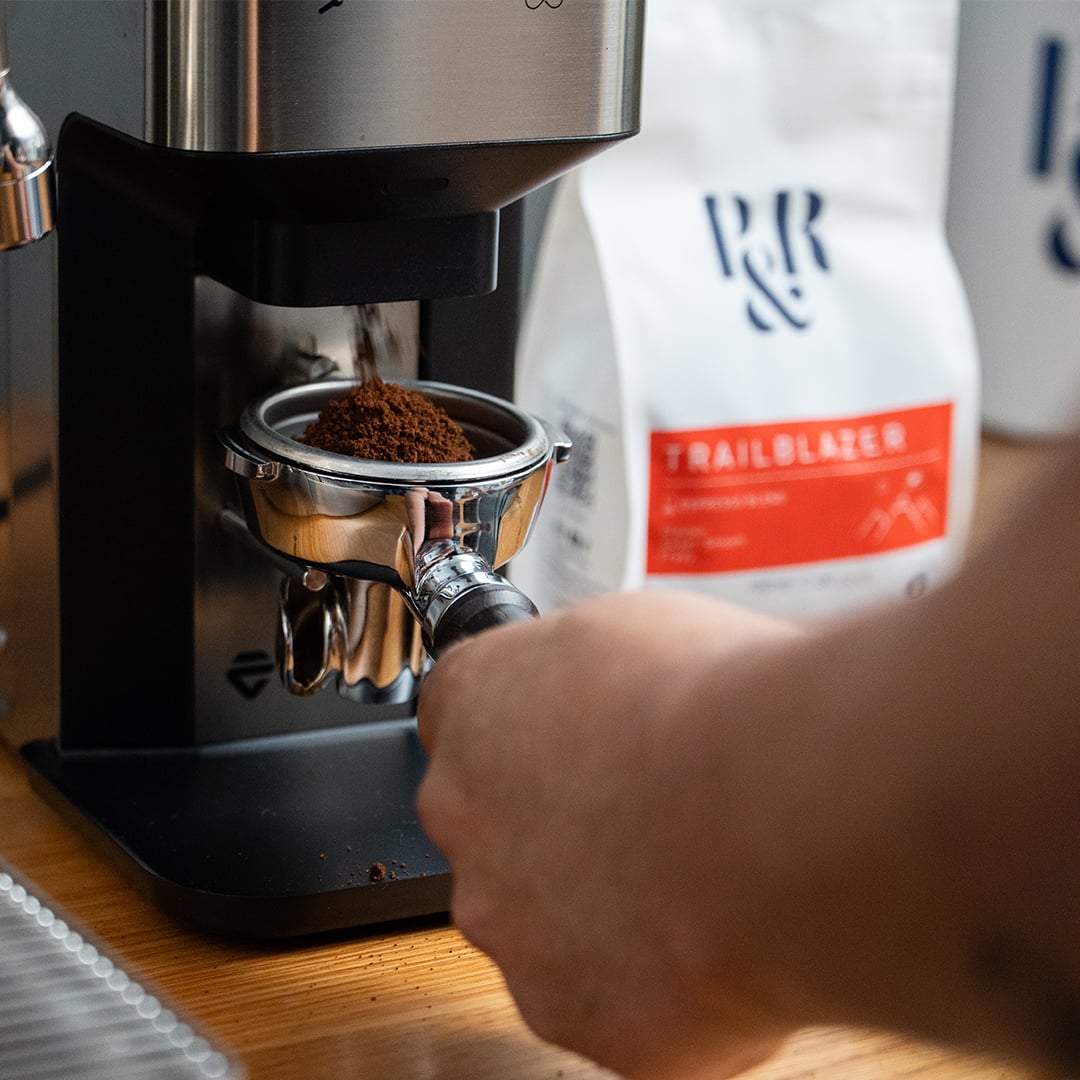
Trailblazer was the most sensitive to pressure adjustments during testing.
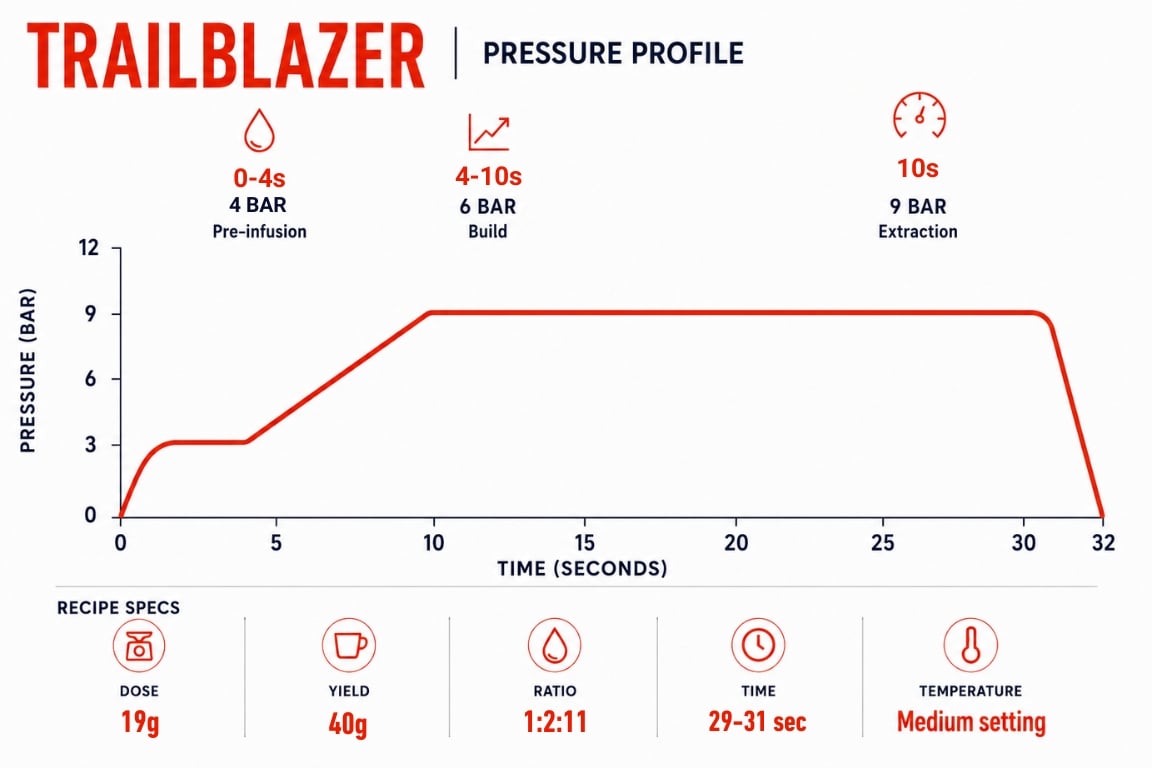
Starting slightly higher during pre-infusion helped stabilise extraction while the longer overall shot time created a more rounded and layered result in the cup. The final recipe helped retain Trailblazer's citrus and stone fruit characteristics without introducing excessive sharpness.
Recipe
- Coffee in: 19g
- Coffee out: 40g
- Ratio: 1:2.11
- Time: 29 to 31 seconds
- Temperature: Medium setting
Pressure profile
- 0 to 4 seconds: 4bar
- 4 to 10 seconds: 6bar
- 10 seconds to finish: 9bar
In the cup
- Citrus brightness
- Stone fruit character
- White chocolate sweetness
- Buttery texture
- Rounded finish
What the research says
The science around pressure profiling is still evolving, but recent studies are beginning to support what many baristas have experienced through taste.
Research published in the Journal of Agricultural and Food Chemistry found that higher pressure espresso extractions often increased bitterness and astringency, while more recent work from the University of Oregon suggested lower-pressure extractions can improve consistency and extraction balance.
Separate research has also shown that flow rate may influence flavour just as heavily as pressure itself, helping explain why different pressure curves can produce noticeably different results even when peak pressure remains the same.
The broader takeaway is that pressure is another variable that can be adjusted intentionally depending on the coffee and the flavour outcome you are chasing.
Building your own profiles
The recipes above are not intended to be a rulebook.
Every coffee behaves differently depending on roast level, density, processing method and freshness. Even the same coffee can behave differently week to week as it ages.
Pressure profiling works best when treated as a framework for understanding flavour.
If your espresso tastes sharp or hollow, try softening the early pressure phase.
If bitterness builds too heavily toward the finish, experiment with reducing pressure later in the shot.
If sweetness feels muted or flat, consider extending the medium-pressure phase before ramping fully into peak extraction.
The best recipes are almost always the ones you discover through experimentation.
-v1780285909771.png)
Final thoughts
One of the most exciting things about modern home espresso is how much more connected the brewing process has become to flavour itself.
Machines like the Lelit Mara X3 are making advanced extraction tools more accessible without making the workflow feel intimidating or overly technical.
Throughout testing, the overall workflow consistently felt approachable and repeatable. Stable extractions, quiet operation and smooth pressure ramping created a workflow that encouraged experimentation rather than fighting against it.
For coffee drinkers who enjoy exploring flavour, pressure profiling adds another layer of control and experimentation to espresso brewing. Even small adjustments can noticeably change sweetness, texture, clarity and balance in the cup.